How competition and concentration of firms leads to disasters at scale.
A CNBC article earlier this week came to a somewhat shocking conclusion, given the source: corporate concentration can have some pretty adverse side effects, actually. You’ve probably already heard about (or worse yet, experienced) the multi-state cyclospora outbreak that’s been effecting some fresh vegetables in the US supply chain, especially lettuce, which has hit restaurants like Taco Bell, and has resulted in a lot of recalls from the produce section of your local grocery store. There’s definitely an element of regulatory failure here, as RFK Jr’s disastrous Department of Health and Human Services had already cut crucial monitoring programs, and has botched the response to the outbreak. But regulation is far from the only problem here.
Taylor Farms, one of the key points of failure in this outbreak, manufactures a lot of the pre-packaged salads and slaws you find at the grocery. And in order to do that as profitably as possible, they concentrate all their production of these kinds of salad kits, as well as processing for restaurants (like the shredded lettuce they send to Taco Bell) into a few large processing centers, as opposed to having more, smaller, regional facilities. This makes sense on some level, specifically the profit level. The operational costs of a single, larger facility, run closer to its maximum capacity, for more hours each day is more profitable for the company that owns it than two smaller facilities operating at lower levels of intensity. That’s in spite of the fact that delivery costs to and from that larger facility are greater, as many of the raw foods have to be shipped further to get there, and many of them have to be shipped back out to markets much further away from the processing plants.
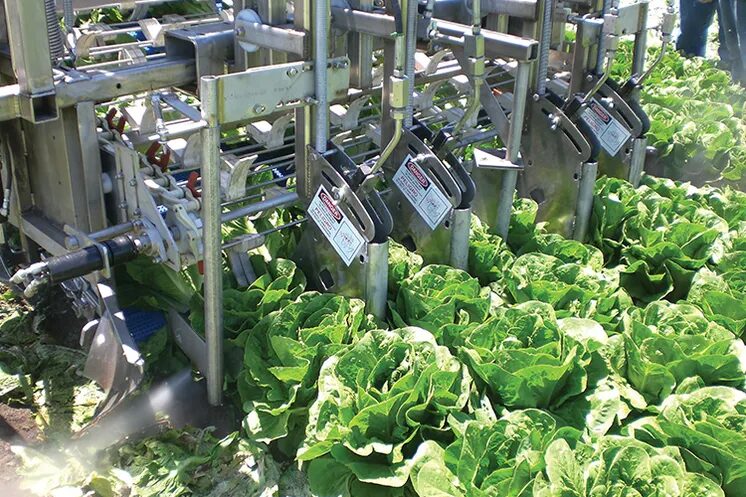
And then these kinds of products are distributed by large, heavily-centralized conglomerates like Sysco and US Foods, who sell these products to vendors all over the country. So we can see the problems here pretty clearly. By concentrating all the processing into a few key facilities, and having a small handful of distributors dispersing these products throughout the country, American food conglomerates have made the threat of large contamination endemic. One contaminated crop from one farm gets mixed in with product from other places, contaminating them, and then the contaminated products quickly land in stores and restaurants all over the place.
The article traces the consolidation history of Taylor Farms and Sysco, noting that Sysco nearly merged with US Foods in 2015, in a deal that was ultimately blocked by the Federal government, but there’s not much curiosity shown as to why consolidation is the norm. It says in passing that these mergers are driven by “desire for efficiency and national scale”, but like most of the capitalist business press, the article totally ignores what a damning indictment of their whole theory of competition this kind of analysis hints at. If scale is always more efficient for business, and firms with greater scale will over time grind down all rivals who can’t sharpen their scale to the same degree, isn’t concentration, if not monopoly, the most likely outcome of competition in general? This race towards scale isn’t an aberration or a mistake, it’s the most logical thing for companies to do, and it’s exactly what we see them do, over and over, in every industry where scale is efficient (or in other words, drives diminishing marginal unit costs the greater scale increases).
Rather than analyze the logic of competition, the article presents this quandry as a debate. It gives us competing analyst views, with one NYU professor arguing the risks inherent to concentration and scale in the food industry, and an “expert” (regrettably a fellow alum of Georgia State) who merely whatabouts towards the problems that small producers can and do have with maintaining adequate sanitation processes. This debate framing mirrors the divide between Keynesian and Neoclassical economists on these sorts of subjects — the issue of firm size, in both cases, is treated as a kind of preference. The neoclassical side, as always, defends the larger firms which shouldn’t actually be capable of existing within their “perfect competition” model.
And the industry trade group who answered the author’s request for comment on Sysco’s behalf touches a common refrain from Neoclassical economists when it comes to explaining scale:
“The foodservice supply chain that feeds our communities is intricate and foodservice distributors are highly skilled in tracking and tracing the food they distribute,” said a spokesperson for the International Foodservice Distribution Association. “They maintain robust records, identifying the source, internal movement, and recipient of all products they handle, and they have a proven track record of providing FDA with critical traceback information within 24-48 hours to support foodborne illness outbreak investigations and swiftly remove products from commerce.”
Neoclassical economists overwhelmingly blame concentration in markets on regulation, and while neither the Georgia State analyst or the IFDA spokesperson is making this point, they do both point towards the consolidation of systems within a firm (or the problems of not having such systems) in defense of large conglomerates. The inverted arguments work in tandem: only large corporations can functionally comply with regulation, and there are only large firms because they have to comply with regulations. Of course, this ignores the fact that concentration preceded regulation, and the kinds of spread of contamination we’re seeing now was exactly what early regulators were pushing back against by regulating some markets, especially things like mass-produced food, which can be extremely dangerous when mishandled. This circular logic about regulations being the need for scale is systematically denying the real economic impulses that drive scale.
I covered a lot of these debates in a video I made a few months back called One Way Street, which works to demonstrate that consolidation at scale is one of the defining aspects of capitalism, and that any workable theory about competition has to account for the pressure to scale up, and how that effects businesses and markets. And that’s exactly what interested me so much about this CNBC article. I even talked about a similar kind of negative consequence of scale, specifically, how companies like McDonalds concentrate a lot of productive capacity at scale, which is highly profitable, but ultimately unfulfilling. Instead of having more unique, local food options, we get massive overlap of large fast food conglomerates across the country, which is boring. It makes our diets revolve around these supply chain functions that lead to us eating worse, more boring, but slightly cheaper food.
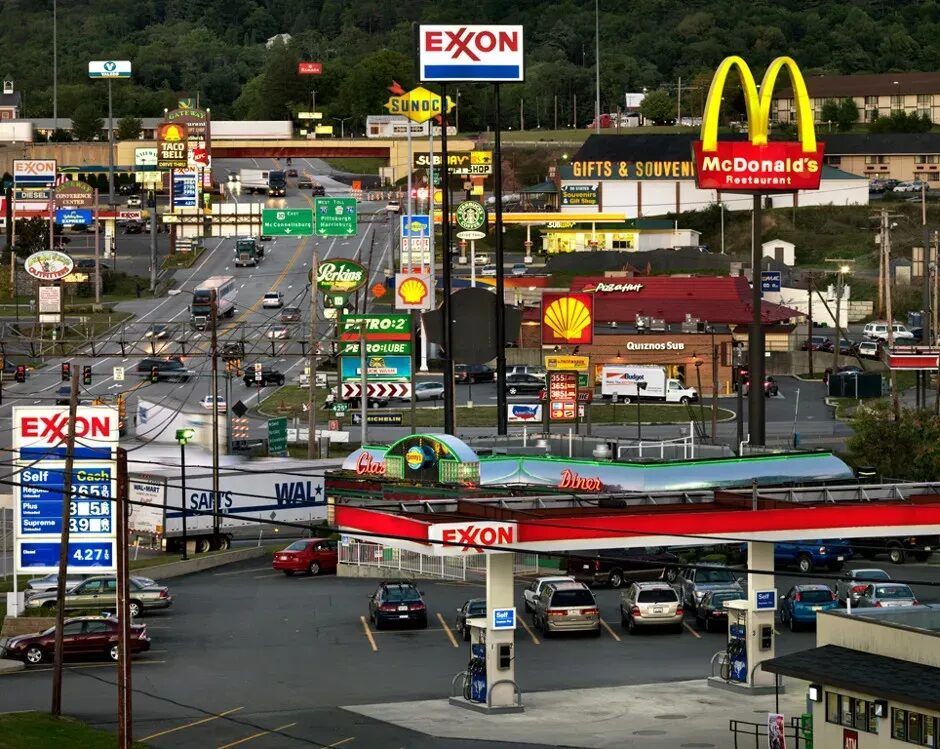
The cyclospora outbreak is the other side of this coin, and frankly something I should have touched on in that video (which was already 90 minutes so I’m gonna give myself a pass on that). I think you could make the same argument that having the same Taylor Farms bagged Caesar Salad kits in half the grocery stores in the country is boring in the same way McDonalds is, but it’s also dangerous. Contamination spreads much faster and wider by doing things this way, and in spite of the IFDA’s claims about tracking and tracing, the companies involved and the federal agencies scrambling for solutions are struggling to identify the source of the outbreak, even after several weeks recalls. With more localized production and distribution, we might still have some problems with outbreaks and contamination, but we would be pretty easily able to figure out the source of the outbreak more quickly, when the outbreak itself is more limited.
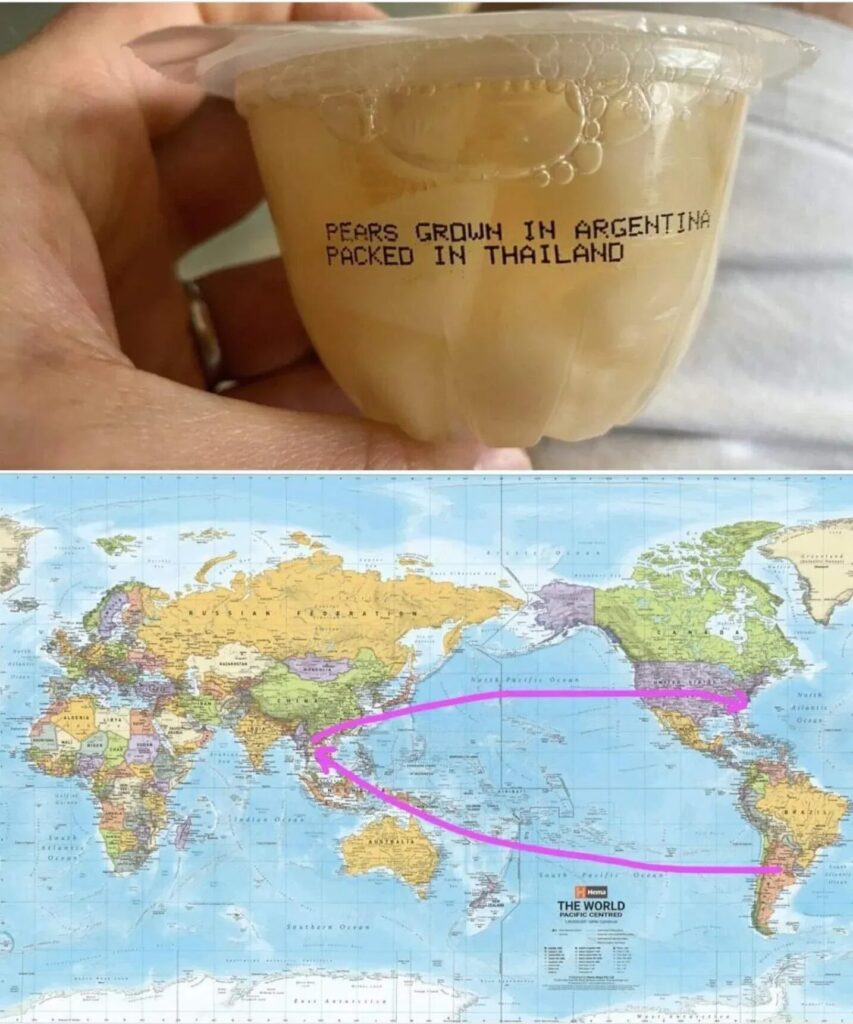
The other big benefit to localizing production and keeping more food in the region it was grown is environmental. There’s a meme I see every so often about a little cup of processed pears, grown in Argentina, sent to Thailand for processing, and then shipped back to the US for sale. This kind of processing chain might make dollars and cents logic to a big corporation (the kind that are members of the IFDA, for instance…), especially with oil prices kept artificially low over the past decade or so, by OPEC+ and by the US through the Strategic Petroleum Reserve. But it’s pretty obvious on its face that this is a nonsensical thing to do just to reduce labor costs by maybe pennies per unit, once you’ve shipped pears halfway around the world twice. And the environmental costs of production arranged in this way are just absurd and unnecessary.
As I explain in One Way Street, this is central planning, of sorts, albeit private central planning. Why should anyone accept letting corporations plan the economy like this, in the most exploitative and environmentally degenerative ways imaginable, but reject socialized central planning? We should be prioritizing localization of food supplies, keeping as much of any given crop or animal product within 50 miles or so of where it originates as possible, with pricing built to drive consumers towards local fare. Things like bananas and coffee, which have quite narrow geographic viability in terms of where they can be grown, but globalized demand, should be priced to reflect the cost that it incurs to the planet to make such products available to consumers.
Bananas and coffee are great examples in this story as well. Bananas are another victim of corporate agricultural practices — companies like Chiquita have created an idealized image of the banana for marketing purposes, shunning everything that isn’t the perfectly curved, bright yellow Cavendish bananas you would see in an advertisement or in a cartoon. The monoculture of Cavendish bananas has made them extraordinarily susceptible to Panama disease, a fungus that nearly wiped out the Cavendish’s idealized predecessor, the Gros Michel banana, decades ago. Chiquita and Dole and Del Monte repeated all the same mistakes that decimated the Gros Michel, because they are more driven by psychological manipulation and marketing than common sense. They created the demand for “perfect Cavendish”, told consumers in ads that they wouldn’t sell, nor should the consumer accept, anything less than a “perfect Cavendish”, and now many consumers treat the aesthetic criterion of corporate marketing departments as if it were scientific fact.
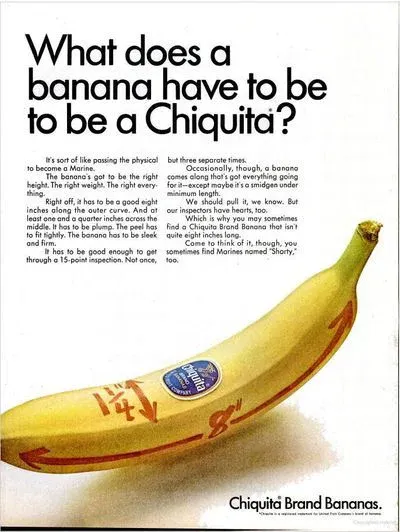
The packaged salads carrying cyclospora have so much in common with the “perfect Cavendish” in this regard. Their centralization of production makes them highly vulnerable to outbreaks, for one, but pre-made salads are also indicative of American consumer habits and the fickleness towards produce on purely aesthetic grounds. Heads of lettuce have the same kinds of problems as bananas, in that consumers have fallen victim to the Big Ag/grocery store idealized aesthetic feedback loop, meaning it’s much easier for Taylor Farms to sell bags of shredded lettuce and salad kits than it would be to sell those same heads of lettuce right off the shelf. And the convenience to the consumer means they can charge a lot more for the same lettuce by processing it. In the article, it mentions that some of Sysco’s acquisitions of smaller firms was geared toward “value-added production”, which includes things like salad kits and cups of Argentine pears processed in Thailand.
It is in their direct financial interests for us to be as alienated from food as possible. The more we see it as some magic thing we’re not capable of doing for ourselves (cooking things from scratch, that is), the more we depend on them for “value-added” products, and the more money they make selling us the same heads of lettuce. Which means it’s also in their financial interests for us to be as over-worked and burned out as possible, so that we don’t even want to cook. Multi-income households struggle over food, as people know in theory that they can eat cheaper by making things for themselves, but it can be a very difficult habit to keep up cooking with so few hours available for ourselves, with 8 (at least spent at work) and 8 (ideally) spent in bed. None of which is to say that pre-made meals or restaurants are bad things for not making us cook, but I want those things to be geared towards enriching the people eating them, not exploiting those people for profit, and often making their eating habits worse. The logic that leads to McDonalds and Taylor Farms is killing us and the planet on so many levels.
Which leads me back to coffee — arabica coffee beans have an extremely narrow growing region, in the tropics, but only at medium elevation, and only on certain slopes that get just the right amount of sun and shade every day. It’s an extremely fickle plant, and it’s hard to guarantee that you can grow enough of it for the billions of people who want a cup of coffee, many of them having multiple cups every day. And climate change is increasing temperatures around the equator so much that major coffee growing regions all over the world, from Ethiopia to El Salvador, are experiencing months of coffee-destroying heat a year above previous levels. These temperature rises are driven in no small part by supply chain practices like shipping pears from Argentina to Thailand and then to the US, which I think is the big picture this article is missing.
Today it’s a cyclospora outbreak that reaches far more households and toilets than such a contamination of food should be capable of reaching. But as bad as that is, I’m more worried about tomorrow, about the fallout from climate change and the collapse of whole crops and growing regions. Not just cash crops like coffee either, staple crops like rice are threatened by rising temperature all over the world. The CNBC article does not acknowledge the problems of logistics in this case, it only addresses the compounding spread of contamination. But this is a canary in the coal mine for the kinds of globalized supply chains that the IFDA represents. We need socialized, environmentally-sustainable planning now, as these problems are going to keep getting worse, and the people running these corporate conglomerates now aren’t just going to be incapable of stopping the food supply collapses of the future — they’re going to be actively profiting from them.
You can find One Way Street and all my other videos over on my YouTube channel. I’ve covered a lot of subjects there, including economics focused videos like One Way Street, as well as a series about Neo-imperialism called The Hastening. So if you liked this article, please like, share, and subscribe here and on YouTube, and be sure to follow me on Facebook and Instagram.
Leave a Reply