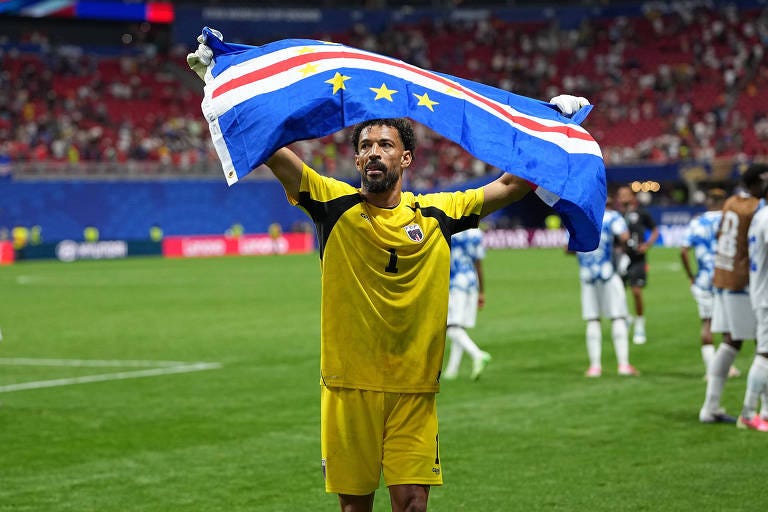
Yesterday’s emphatic 0-0 triumph of Cape Verde over Spain at the World Cup is just the tip of the iceberg of Cape Verde’s underdog story.
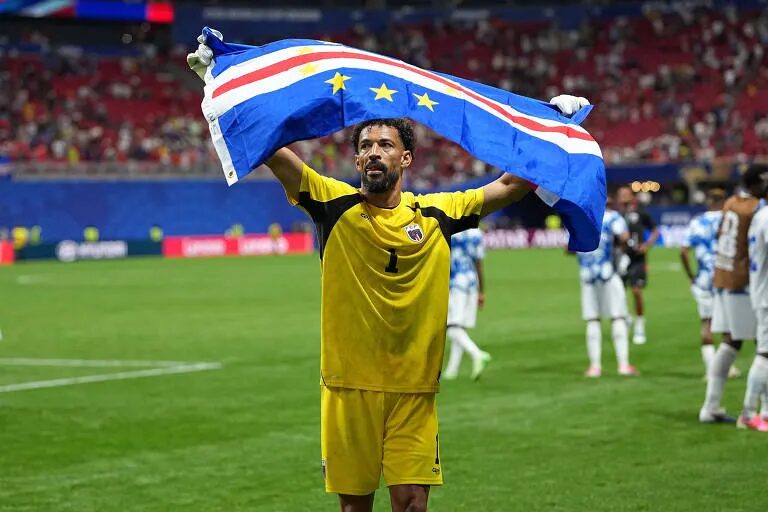
making seven saves and keeping a clean sheet.
You may never have heard of a place called Cape Verde, or Cabo Verde as it’s known in Portuguese, before their exceptionally brave defiance of Spain’s footballing prowess prior to yesterday. The small archipelago on Africa’s western coast only has about a half a million people living there, and in fact, its diaspora community in Portugal and the United States is larger than its own population. But Cape Verde has played an outsized role in world history more than once.
Cape Verde was a Portuguese colony from 1462 to 1975, and its location in the eastern Atlantic Ocean made it an ideal transitory point for people being trafficked into slavery out of Africa during the transatlantic slave trade. Of the tens of millions of people trafficked through the so called “middle passage”, millions passed through the ports in Cape Verde, most of them on their way to Brazil, which did not abolish slavery until 1888, the last country on earth with a large population of enslaved people to do so. The end of the human trafficking industry of that era led to an economic contraction in the islands, which by the mid 20th century were treated by the Portuguese as little more than a shipping yard.
But the winds of change were gusting in the 1950’s, as decolonization movements swept around the world, from Indochina and Algeria, to Ghana and Kenya. If the British and French were struggling to cling to their empires, what chance did backward Portugal, with its limited industry and weak economy, have to maintain its empire? Portugal’s empire at that point consisted of four main territories — Mozambique and Angola, in southern Africa, and Guinea-Bissau and Cape Verde, in west Africa. And even just to glance at a map, you would be able to guess which of these colonies was seen as most important to the Portuguese. Mozambique and Angola are massive, not to mention they have crucial ports, and Angola is especially rich in oil.
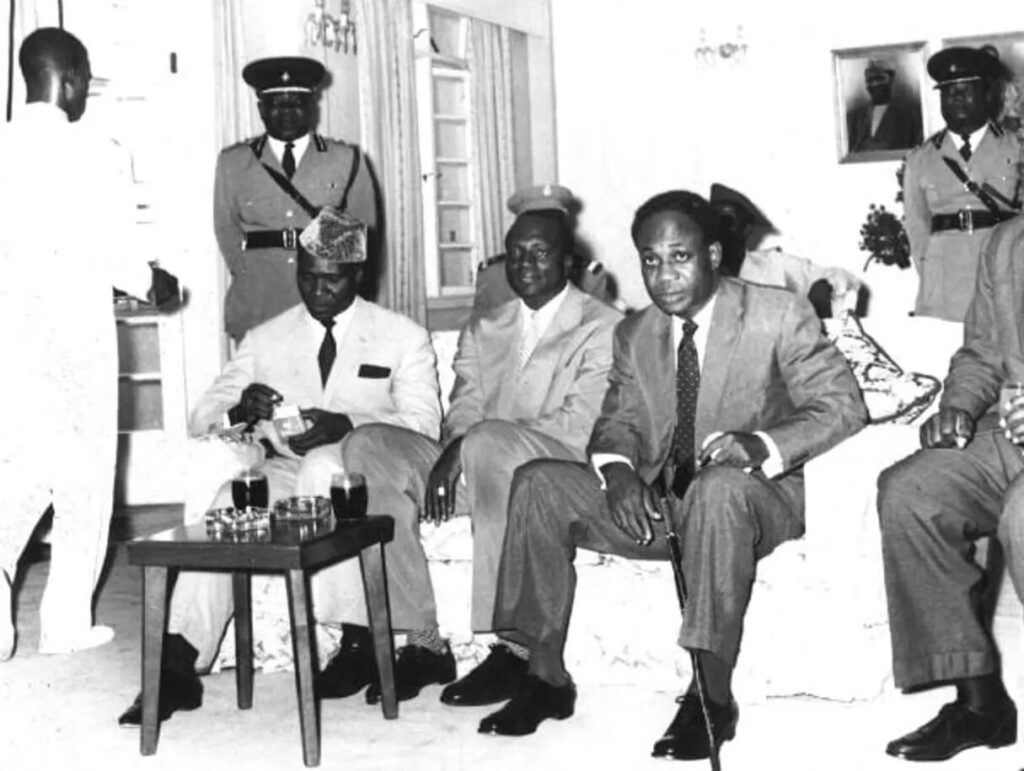
When the French and British faced mass resistance that they could not put down, they pivoted, throwing away the old model of direct colonial rule in favor of neo-imperialism, the management of colonies by proxies, which gives the imperial power plausible deniability. (I talk a lot about this on my show, The Hastening, which you can check out on my YouTube Channel). The Portuguese thought this was all a load of utter woke nonsense, and decided to fight on for control of their empire, no matter the costs. By the early 1960’s, as the British and French were finalizing the transfer of power from colonial administrators to local nationalist parties, usually ones they had groomed as their preferred proxies in the preceding years, the Portuguese found themselves fighting on all fronts.
The Portuguese government, a fascist regime known as the Estado Novo, assumed that the southern colonies were their main problem, and the Angolan MPLA and Mozambican FRELIMO were formidable foes to be sure, but their Achilles’ Heel was in Cape Verde. The military warehouses and support services hosted in Cape Verde were essential to fighting their wars in the south, as all Portuguese troops headed for Angola or Mozambique passed through Cape Verde on their way. Amilcar Cabral, a key figure in Guinea-Bissau and Cape Verde’s independence movement, took note of this. His party, the PAIGC (Partido Africano para a Independência da Guiné e Cabo Verde, or African Party for the Independence of Guinea-Bissau & Cape Verde) unified the struggles of Guinea-Bissau and Cape Verde into one, knowing how important Cape Verde was in maintaining Portuguese colonialism, and how exposed the Portuguese would be if Cape Verde fell out of their grasp.
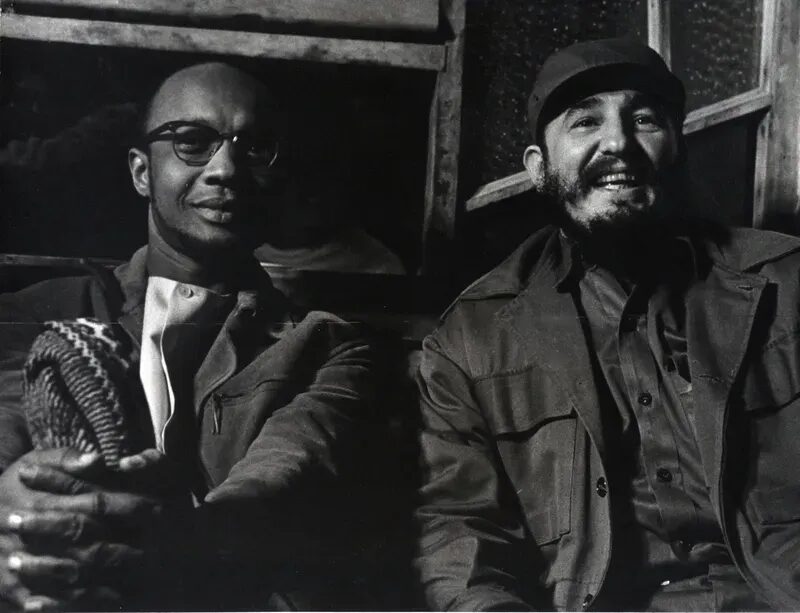
At first, the Cape Verdean role in the liberation struggle was largely one of support; Cape Verdean spies and informants tracked the movements of Portuguese ships and cargo and alerted their comrades on the mainland to what was coming for them. But as the struggle deepened, armed struggle spread to Cape Verde, slamming shut Portugal’s door to Africa and numbering the days that the Portuguese empire could continue to survive. We can see how weakened the Portuguese were by around 1970 as a result of being hit so hard in their critical logistics hub — 1970’s Operation Green Sea was intended to send a force into Conakry in the neighboring Republic of Guinea, the PAIGC’s main sponsor. Guinea’s President, Ahmed Sekou Toure, was a supporter of liberation movements around Africa, and had allowed the PAIGC to set up a critical headquarters in Conakry, outside Portugal’s reach, or so they thought.
The Portuguese intended to topple his government and capture Cabral, but the weak force the Portuguese sent only managed to release a few of their POW’s before turning tail and running. This kind of frail operation is emblematic of the Portuguese war at that point — the volatility in Cape Verde forced the Portuguese to switch to marine amphibious operations, choosing to try to fight directly from the sea rather than continue risking their operations being exposed and harassed by using Cape Verde as a shipyard as they had been doing. They got weaker and weaker until in 1974, they could no longer even hold power at home, and the Carnation Revolution toppled the Estado Novo.
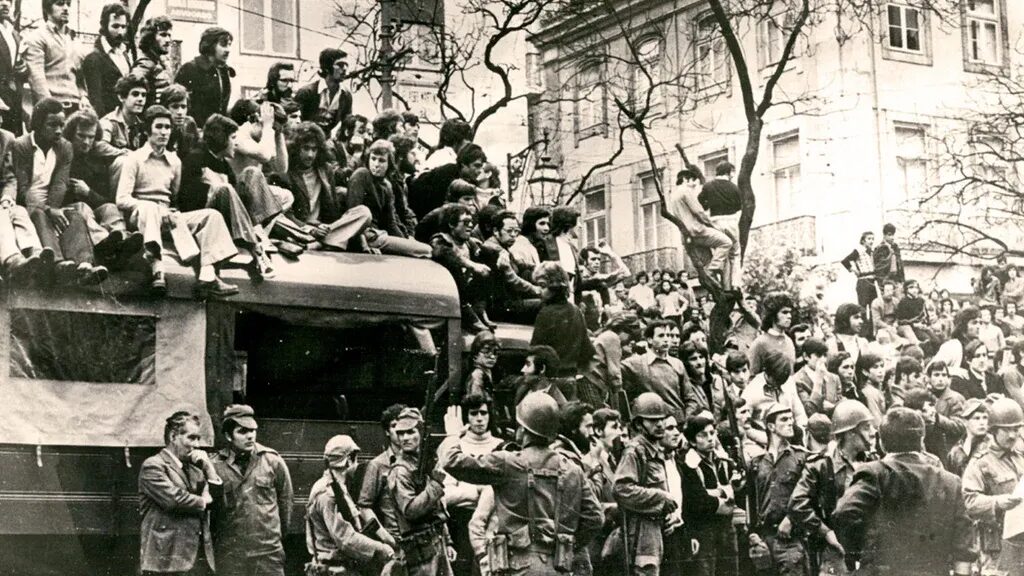
You may never have heard this story (largely for reasons I talk about at length in the latest episode of the Hastening). But this underdog story matters quite a lot. The world was in flux at that point, torn between the Portuguese’ efforts to maintain old-school colonialism, the US/British/French push towards neo-imperialism, and the USSR, People’s Republic of China, Cuba, and others pulling the world towards a new dawn of socialism. What would have happened if the Portuguese had won, and barbarous colonialism had managed to keep a foothold? Cape Verde’s independence, along with Mozambique and Angola, in 1975 was only about 15 years before the USSR collapsed, and a matter of months before Deng Xiaoping’s coup nullified China as a backer of liberation struggles around the world. If Portuguese empire had lasted much longer than it did, it might still be here.
Would the British and French and US still have kept going forward with neo-imperialism if the Portuguese had proven that old-school empire could still be sustained in the world? We might live in a much bleaker world than we do (hard to imagine, I know) if not for the armed struggle and sacrifice of those who fought for the PAIGC. And there’s a big lesson here, in that the big, obvious, cataclysmic battle isn’t always the one that decides the outcome of the war. Sometimes, action on a smaller front can have an exponential impact, and that’s exactly what happened in Cape Verde, and Guinea-Bissau. They cut the Portuguese legs out from under them, and toppled a giant nobody thought they were capable of toppling.
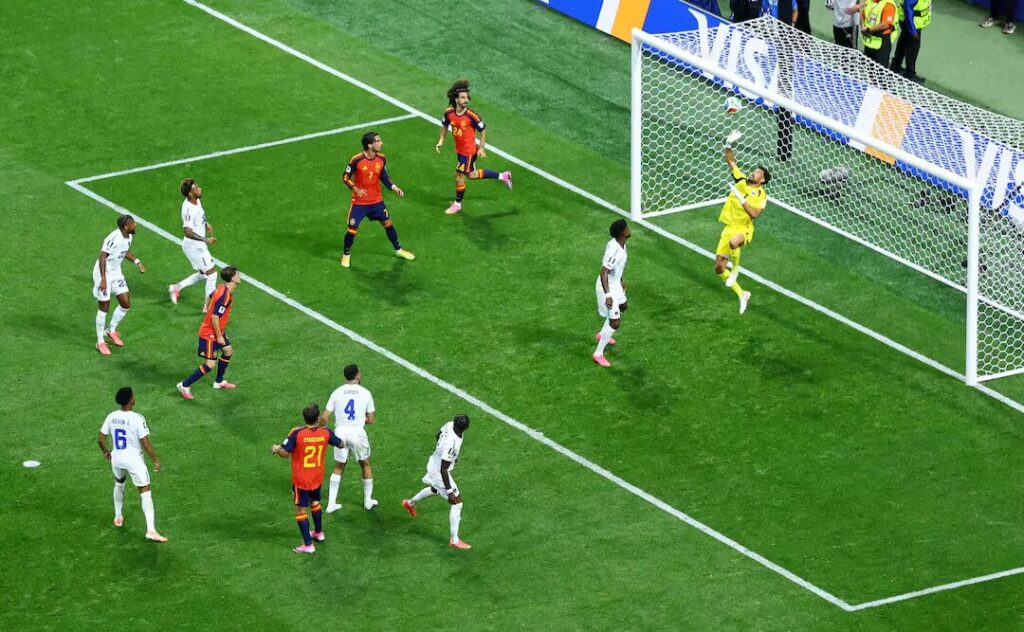
And as I watched that game yesterday, hollering at my TV like I’ve been watching this team play my entire life, I could feel where their audacity was coming from. There were two players in the Cape Verde starting XI with the name “Cabral”. The star of the game, Cape Verde’s goalkeeper Vozinha, is 40 years old, born only ten years after Cape Verde was liberated. I suspect this team knows their history and where they come from, and what their ancestors did so they could be free. I cannot wait to see how far they can go in this tournament.
__________________________________
If you’ve just come across my work, welcome! I’m part of a collective of artists and creators operating the Community Broadcasting Network, a place where we can express ourselves and amplify each other’s work to a larger audience. You can watch all our videos and check out our blog over at www.communitybroadcasting.network, and you can also find CBN on YouTube. Please do me a favor as well, and check out my videos on YouTube as Elrond Hubbard (elrondhubbard42069), and follow me on Instagram, covering the history of oil in Iran, BP, and how Iran and the US became enemies. I’m really excited about sharing all the work I’ve put into this one with y’all so please go give that one a like and a comment if you wanna help boost my signal.
We’ll talk again soon.
Leave a Reply