In making my video essay series called The Hastening (of the Death of Imperialism), I often find myself in these weird little muddles, where I can’t figure out exactly how deep I need to go to back up a claim I’m making. I try to be as thorough as I can about as many things as I can, and I often expand my thoughts quite a lot in the graphics, which come and go too quickly to be fully read by the viewer in real time (I recommend pausing regularly, but you don’t need to), but can give an inquisitive viewer something to latch onto so they can go looking for themselves (if they don’t believe me or just wanna know more than I could lay out in that moment). But even then, I feel like some of my basic precepts assume some level of awareness on the part of the viewer.
For instance, I often talk about how the US media plays a huge role in creating a mass social amnesia towards US imperialism, and I am generally assuming that viewers will either know this is true already to some extent, or will understand by the end, by default of me telling them stories they’ve never heard (which I hope encourages them to ask why they’ve never heard names like Nkrumah and Cabral). And laying out a bunch of examples all at once, every single time I point this function of the media out (constantly), would make it impossible to ever finish anything I do. One big reason I wanted to get myself a blog like this is so I can start plucking examples of this practice out in real time, to reinforce the knowledge I’m trying to promote on The Hastening.
And this week, CNN gave me a really crystal clear example of white-washing, blame-shifting, and imperial denialism so potent that I want to dissect it here, as a case-in-point of this core claim I make all the time on the show.
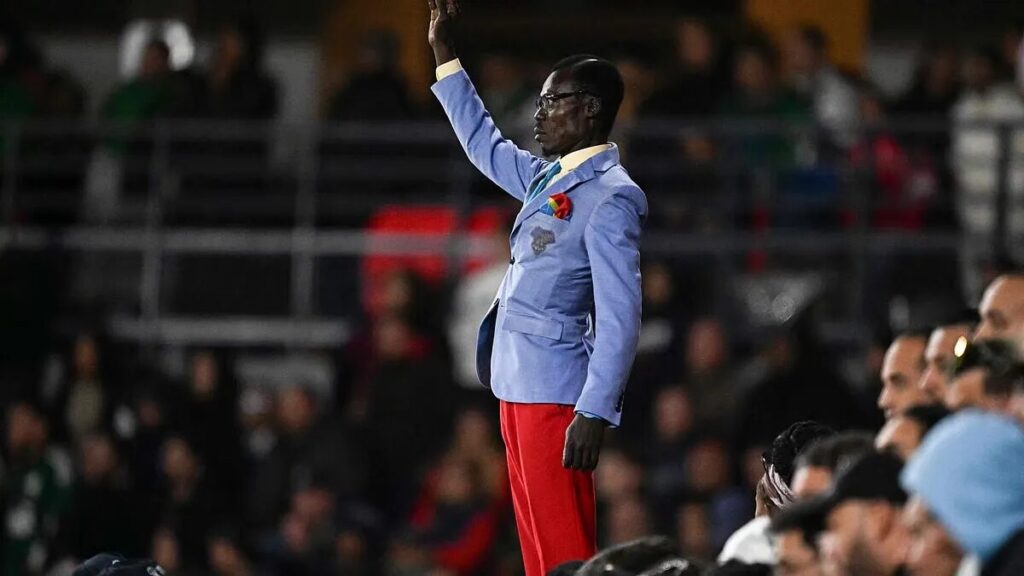
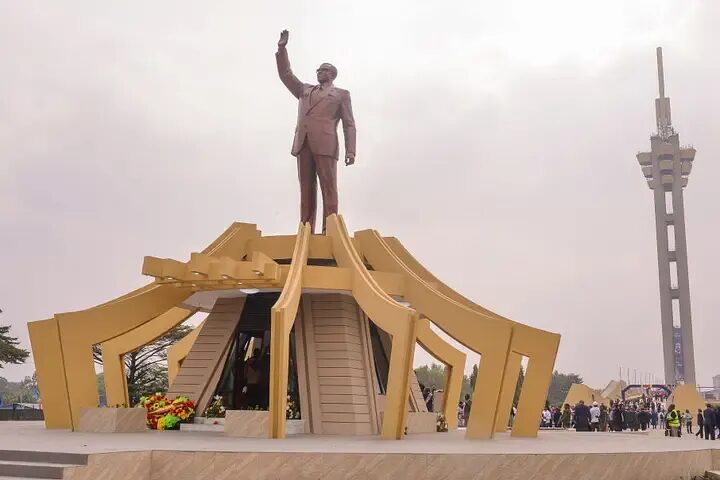
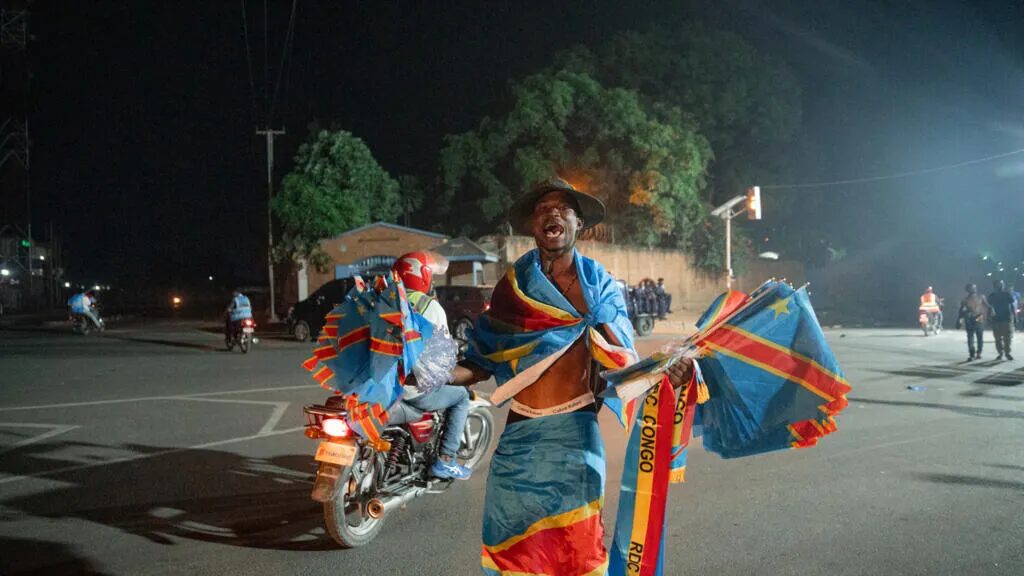
If you’ve been watching the World Cup, and in particular if you saw the game between the Democratic Republic of the Congo and Colombia, you may have seen this man: Michel Kuka Mboladinga, also known as Lumumba Vea (or Lumumba Lives), a Congolese football fan who attends just about every DR Congo game in his slick, DRC-flag-colored suits. Mboladinga stands for the entire game like a human statue with a raised fist, an homage to the statue of Congolese liberation leader Patrice Lumumba that sits above the mausoleum in the Congolese capital Kinshasa, the final resting place of Lumumba’s remains (more on that later).
I think the purpose of this demonstration is kind of obvious; Mboladinga is trying to support the team and amp up the Congolese crowd by portraying arguably its greatest national hero, but he’s also trying to bring attention to the legacy of Lumumba, and the story of Lumumba, to a global audience, and to younger generations, many of whom have never heard the name Lumumba. And right out of the gate, CNN’s article sets off some red flags, because while the piece is ostensibly explaining who Lumumba was, the author is avoidant of the idea that there is any greater lesson or wider context here than just Congolese history, which their mostly Western (if not mostly American) audience likely don’t know.
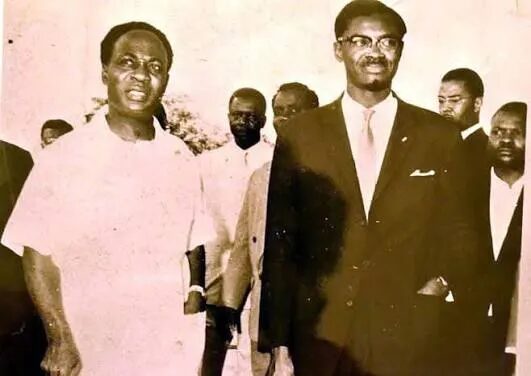
Patrice Lumumba was a crucial figure in the independence movement of the DR Congo, as the leader of the Congolese National Movement (MNC), which was notable for its lack of ethnic focus — many of the other Congolese parties of the time represented particular ethnic groups within the country, but not Lumumba and the MNC. Lumumba was one of the titans of the pan-Africanist movement of that era, and the 1958 All-African People’s Congress in Accra, Ghana (hosted by Kwame Nkrumah) was a sort of coming-out party for Lumumba and the MNC. Lumumba after that convention was seen as one of the most important leaders of the pan-African movement. He was as intelligent and charismatic as other leaders in the movement, like Nkrumah and Guinea’s Ahmed Sekou Toure, but he had something they didn’t have: a much larger canvass to paint with, so to speak.
The DR Congo is the 11th largest country on earth by land mass (the largest on the African continent) and the 13th largest country on earth by population (second only to Nigeria in Africa). But it isn’t simply vast, its an economic and strategic lynchpin in the modern world. The DR Congo contains an estimated $24 trillion worth of natural resources, one of the richest countries on earth as far as its natural wealth is concerned. And they possess the majority of some crucial industrial and technological inputs, like Coltan and Cobalt, without which the tech boom of the internet age would simply not be possible.
Ghana and Guinea are rich, but the vastness of Congolese mineral wealth is almost unfathomable. Meaning Lumumba’s vision of total Congolese independence, state-led economic development, and the removal of parasitic European extraction was an exponentially larger threat to Western imperialism than Nkrumah or Sekou Toure were. A successful MNC and a successful Lumumba would have had immense power to pull the rest of Africa towards pan-Africanism, and the world would have been forced to accept Africa on African terms.
And we can’t have that, can we?
Neither the vast mineral wealth of the DR Congo, nor even the concept of pan-Africanism, are brought up in the article, something which makes it more or less impossible to actually understand the story on any kind of fundamental level. The article nearly reduces Lumumba down to a single moment — his legendary speech in Kinshasa on June 30th, 1960, marking Congolese independence in a ceremony attended by “King” Baudouin of Belgium, the great-great-nephew of “King” Leopold II.
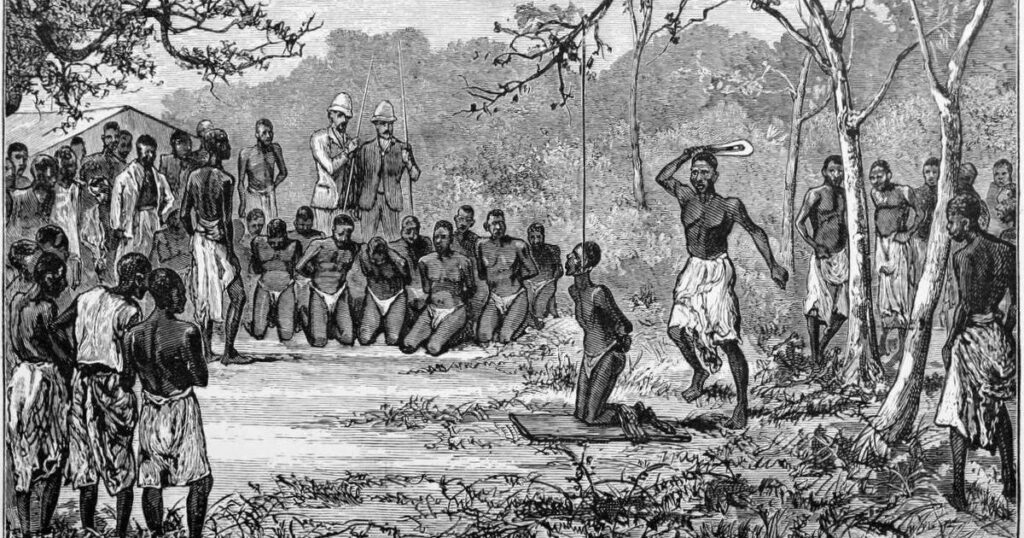
Leopold should be regarded as the largest mass murder in human history, as tens of millions of people have died in the DR Congo, Rwanda, and Burundi over the last ~150 years for reasons directly related to Leopold and Belgian colonialism. More than 10 million Congolese were murdered by Leopold’s regime in the era in which he ruled the colony as his personal fiefdom alone. Tens of millions more have been killed in subsequent decades in civil wars in the Congo, as the US and Belgium fanned the flames behind the scenes to keep any potential heir to Lumumba’s legacy from arising, and to keep the minerals flowing out of the country and into Western hands. Oh, and you might have heard of the Rwandan genocide. The Belgians used a divide-and-conquer strategy in Rwanda that caused the Hutu-Tutsi rivalry to mutate into the kind of animosity that led to the 1994 genocide. Put that one on Leopold’s tab, too.
The snippets that CNN chooses to quote from Lumumba’s speech are quite telling. They do describe the speech as “excoriating Belgian colonialism”, but the quotes used focus on the apartheid aspect of Belgian colonialism, something that I think is designed to reduce the anti-colonial struggle to separation and social subordination, which Americans will tend to see in the context of Jim Crow and South African apartheid. By doing this, I think their goal is to erase the economic element of colonialism, because this is the aspect of Belgian rule in the Congo (and European rule all over the world) that persists most into the present day, and is thus the most important thing to try to obfuscate.
A Congolese person today isn’t worried about being called “tu” instead of “vous” by Belgian colonial authorities, because there are no Belgian colonial authorities there. But they are still having their land and resources exploited by foreign powers, including the Belgians, because Lumumba’s revolution was halted in its tracks, and colonial-era property divisions remain intact. And Lumumba does point this out in the speech, in a line not seen by CNN as crucial to this story:
We have seen our lands seized in the name of ostensibly just laws, which gave recognition only to the right of might.
– Patrice Lumumba “Proclamation of Congo’s Independence”, June 30th, 1960
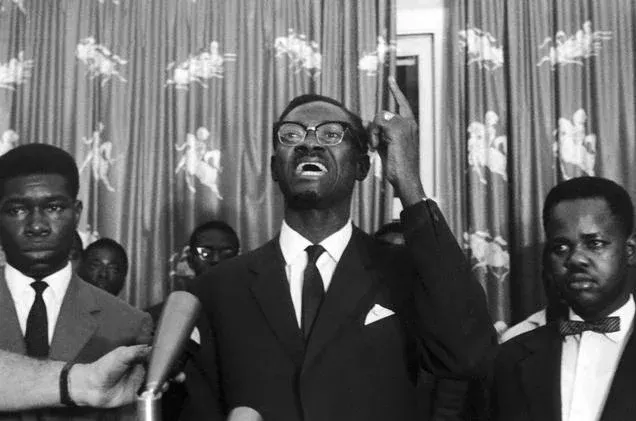
And its the “in the name of ostensibly just laws” part that stands out to me the most, because he’s describing the building of legal pretexts for European ownership of stolen land and resources in Africa, which the Belgians imposed on the Congolese, and which the French, British, and Portuguese imposed on their colonies as well. The continued extraction of resources from “former” colonies like the DRC are still facilitated “in the name of ostensibly just laws”, though rather than colonial regimes facilitating transfer of land and resources to corporate interests from their countries, its now organizations like the IMF and the World Bank, who keep “protection of property rights” as a fundamental prerequisite for lending money to the desperately broke governments of former colonies (who are desperately broke from having their most valuable resources extracted).
This is pretty core to what I talk about on The Hastening, and indicative of the kind of denialism and obfuscation I am usually accusing the media of performing on behalf of the empire. The mainstream US media are categorically dishonest about neo-imperialism, the imperial system that emerged as the dominant form of imperialism in the 1950’s and 60’s, as the old colonial model began collapsing worldwide. And if you’ve seen the most recent episode of The Hastening, you might remember me talking about 1960 as a really important benchmark year for the French especially, as that’s when most of their remaining colonial regimes in Africa were converted into neo-colonies with hand-picked French allies at the helm.
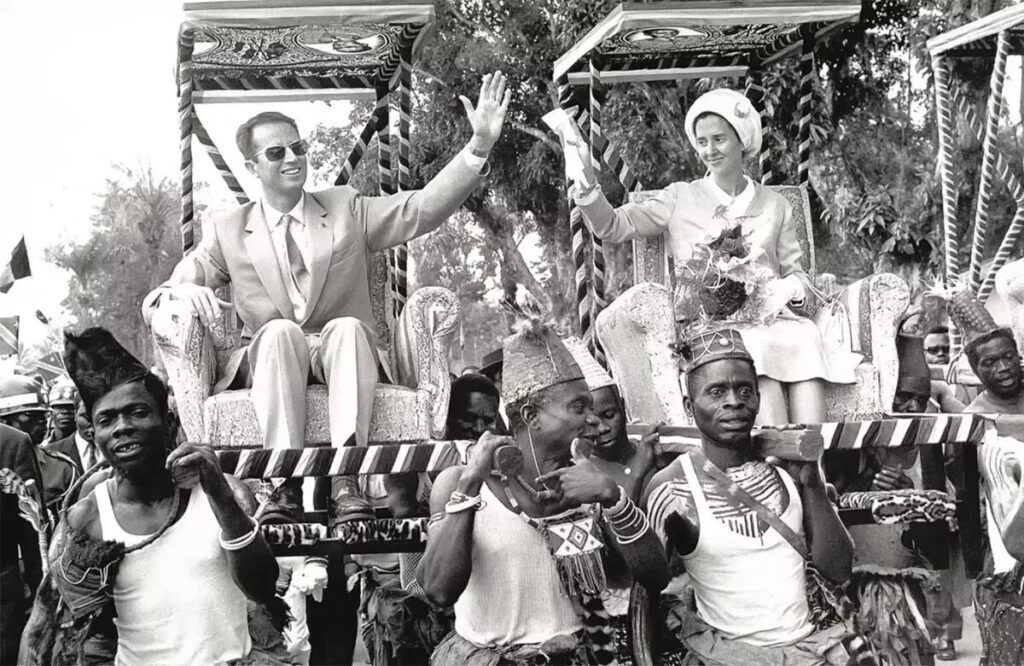
In which case, it should have come as little surprise to see that DR Congo’s independence came about the same year. The Belgians were hoping to follow the French lead in this. The problem for them was that, while the French got about a dozen compliant new allies and only one Sekou Toure, almost all of Belgium’s eggs were in a Congolese basket, and upon independence, that basket was in the hands of Patrice Lumumba and the MNC. Lumumba’s speech, delivered straight to the face of Belgium’s “king”, almost certainly didn’t go down well with the waffle-muncher community, repudiation of their decades of tyranny such as it was.
But we can see by comparing the Belgian outcome of official “decolonization” to that of the French that the Belgian regime was gonna be on the same kind of collision course with Lumumba and the MNC that the French were on with Sekou Toure and the PDG. And the power dynamics there are inverted — France was larger and stronger than Guinea, and their economic warfare against Sekou Toure and the PDG eventually won out. DR Congo is many times larger than Belgium, though, making any kind of protracted economic or armed struggle between the two a much worse situation for the Belgians. They needed to act quickly to get Lumumba out, or else face an increasingly uphill battle for control.
Now, I’m not gonna sit here and act like I would expect CNN (or the author of this piece, London-based sportswriter Emile Nuh) to give my own Hastening-level analysis of this story in this article. But you would think it would occur to either Nuh or the editorial crew at CNN to connect the obvious dots that even their deliberately obfuscatory telling of the story lays out: DR Congo wins its independence from Belgium, the new Prime Minister disses the Belgian monarch at the independence ceremony, and three months later, that Prime Minister is murdered, dismembered, and dissolved in acid, and ultimately replaced by a mass-murdering, narcissistic general who rules the country with an iron fist for the next 30 years. This story is missing its obvious connective tissue: the Belgian and CIA backing of the coup against Lumumba and his murder.
And we don’t need to read into the subtext to draw this conclusion — the Belgians acknowledged their responsibility for Lumumba’s overthrow and murder in 2002. There’s no secret here, and no speculation needed, and yet the author chooses to simply never acknowledge this. It simply pushes the responsibility entirely onto President Kasa-Vubu and General Mobutu, enticing any unaware (again, likely American) reader to assume his overthrow and murder stems from some tribal dispute, too petty to warrant their attention, and obscures the direct Belgian and American coordination behind the scenes. It would be laughable if it weren’t such grotesque propaganda.
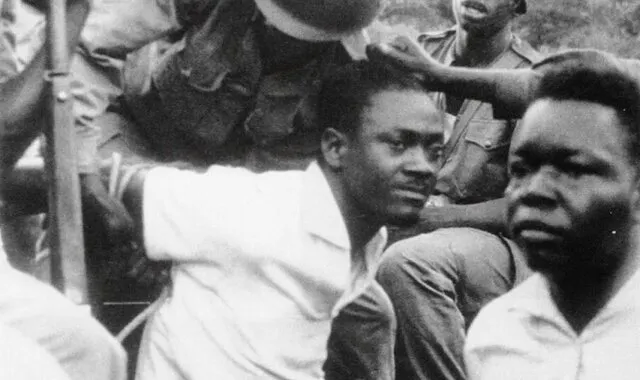
This only proceeds to get worse, as they later have to talk about his infamous gold-crowned tooth, the last remains of Lumumba, held in the mausoleum beneath the statue of Lumumba, to which Mboladinga’s human statue routine pays homage. Who else was in possession of this tooth, but a Belgian mercenary? (Who the article misleadingly describes simply as a “police officer”). It does acknowledge Gerard Soete’s role, as the person who dismembered Lumumba’s body and dissolved it in acid, but does not address the obvious questions of why, to what end, and on whose orders? He and other Belgian mercenaries were working directly on behalf of the Belgians and reporting back to the Belgian government throughout the coup and the assassination. And yet, the article never considers why this Belgian “cop” was present.
More than anything else, this is really what made me choose this article as my punching bag, out of all the dozens of such obfuscatory imperialist drivel I find myself hate-reading every week. It’s just so egregious in its ability to live in denial about imperialism as to be almost comical (almost). And for that reason, it’s a great example of the mainstream media denialism at large, a basal case study of how a news outlet can craft a story so carefully and deceitfully that you might come away thinking you’ve learned something, when in reality, you’ve been given a wildly distorted false-impression, which only sounds authoritative and factual to those for whom this was their introduction to this story. It’s not just wrong, it’s often thought-terminating.
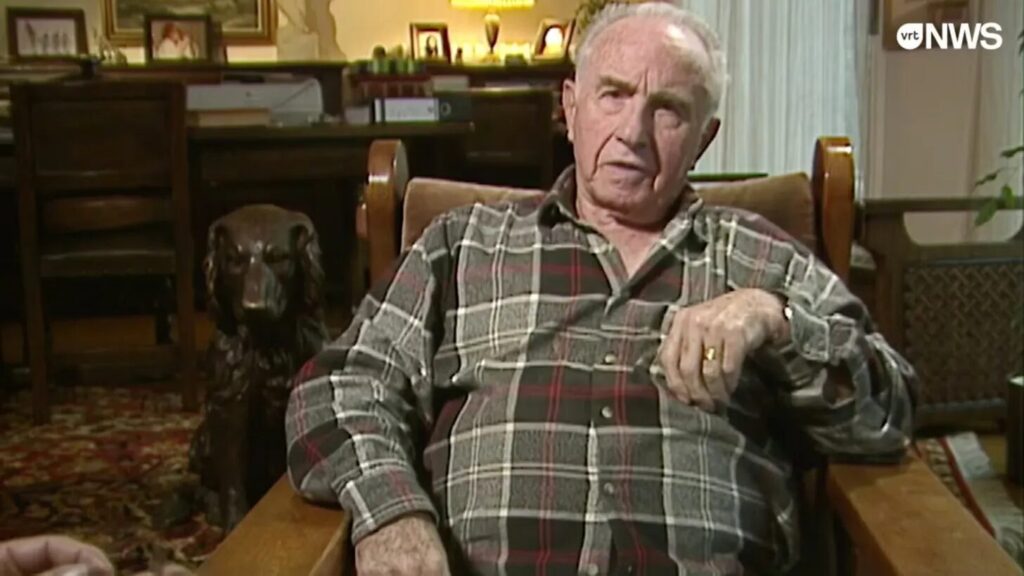
This article’s faults extend just as much into the present, too. Near the end of the article, the author constructs a mirage of the kind of pan-African unity that Lumumba practiced, preached, and was murdered for.
“M23 rebels themselves here in Goma jubilated, and even in Kinshasa people also jubilated,” he told CNN Sports last month. “That shows that football can be a glue that unites people together.”
For those not in the loop, the M23 rebels are a Rwandan and Ugandan backed rebel group operating in the eastern DRC, especially in the area around Lake Kivu. In January 2025, M23 rebels, fighting alongside regular Rwandan troops, sacked Goma, killing thousands and causing millions of people in South Kivu state to flee, fuelling one of the worst ongoing refugee crises on earth. The eastern DRC, where this refugees are currently stuck in limbo, is ground zero for the ongoing ebola outbreak. If you don’t know anything about ebola, it basically destroys your internal organs until you aggressively vomit and defecate blood, and it eventually kills you. So the worst place in the world you could imagine an ebola outbreak is in a refugee camp with no functional sanitation systems (again, put all of this on Leopold’s tab).
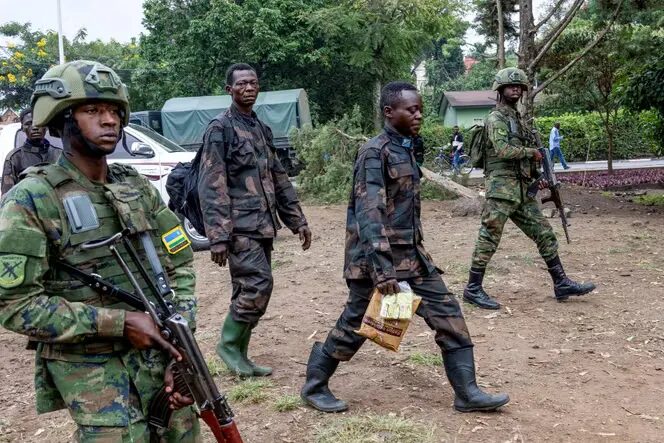
The Rwandan regime oscillates between denying and downplaying involvement, and attempting to justify their support for M23 on the basis that remnants of the Interahamwe, one of the Hutu groups responsible for the 1994 Rwandan genocide, are present in North and South Kivu states, in the eastern DRC, though in recent years, the mask has started to slip completely. But Rwandan security is very much a pretext — the Kivu states are home to much of the DRC’s most lucrative mineral wealth, which M23 is pilfering back to Rwanda, where it is then sold back to the Western regimes that back Paul Kagame’s regime in Rwanda. And you’ll never guess what country has close relations with the DRC government in Kinshasa, and whose state-companies have been granted much of the legal mining rights in the country since the early 2000’s (unless you guessed China).
This kind of pitting of Africans against one another for the benefit of foreign parasites is exactly what Lumumba was against, and exactly what pan-Africanism is about defeating, through continental (and diasporic) unity and collective power. And this section of the article gives away the game CNN is playing even more than the recounting of historical events. M23 claim they want to go all the way to Kinshasa and replace the Congolese government, and Goma is housing a parallel administration to that end. CNN is whitewashing M23 in order to try to prepare its readers, in case they succeed in regime change, securing all those valuable minerals in the hands of a steadfast US proxy comparable to Mobutu. “Even in Kinshasa, people also jubilated”, as though the people in Kinshasa are less Congolese and their reaction to their country’s team qualifying for the biggest tournament in sports is somehow a surprise.
I’m gonna keep identifying some of these precepts, like “the media intentionally creates amnesia about imperialism”, that I bring up all the time in The Hastening, because it feels really helpful to the other work that I do to really get to expound on some of my “footnotes” in depth like this, without having to make a whole video about it. So if you aren’t already subscribed to me on here, please hit that subscribe button, which really helps me keep track of how my audience is growing (fingers crossed).
And please be sure to check out my YouTube as well, where I make full length videos like this about once a month. My latest bit about the history of imperialism in Iran also touches on some of these same subjects, specifically that period of official “decolonization” that occurred around 1960, and how crucial to our modern state of “crypto-imperialism” this era was. The imperial powers learned the hard way in the 50’s that clinging to direct colonial rule was gonna break them before long, and their pivot to neo-imperialism in practice coincides with a big shift in the media towards the kind of obfuscation we just saw in that CNN article, which is very much the norm in the mainstream press.
Feel free to DM me if you want with any other similar articles if you’d like to see me dissect them like I did here, and as always, I’ll be on the lookout for such articles myself. You can also hit me up on Instagram or Facebook to that end, or just to chat.
OH and the DRC team and Michel Kuka Mboladinga will be back in action Saturday evening at 7:30PM ET (in my hometown of Atlanta, GA) against Uzbekistan, and with a win, their chances of making the Round of 32 would be pretty high. Depending on results, a DRC win could knock the Belgians out of potential 3rd-place qualification, and if they both go through, there’s still a chance they could wind up playing at this tournament. I wonder if a direct matchup between the two could illicit a deeper analysis of their shared history, but with media behemoths like CNN controlling the narrative, I doubt it.
Leave a Reply